
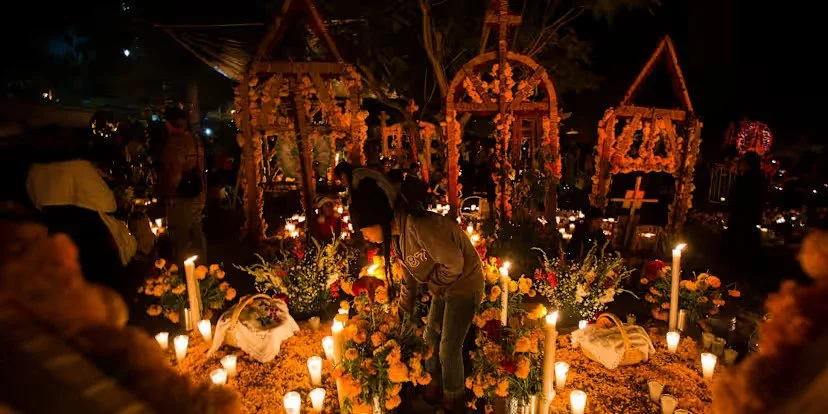
Living with death in this way is central to the way Mexicans integrate life and death, accepting death as part of life.
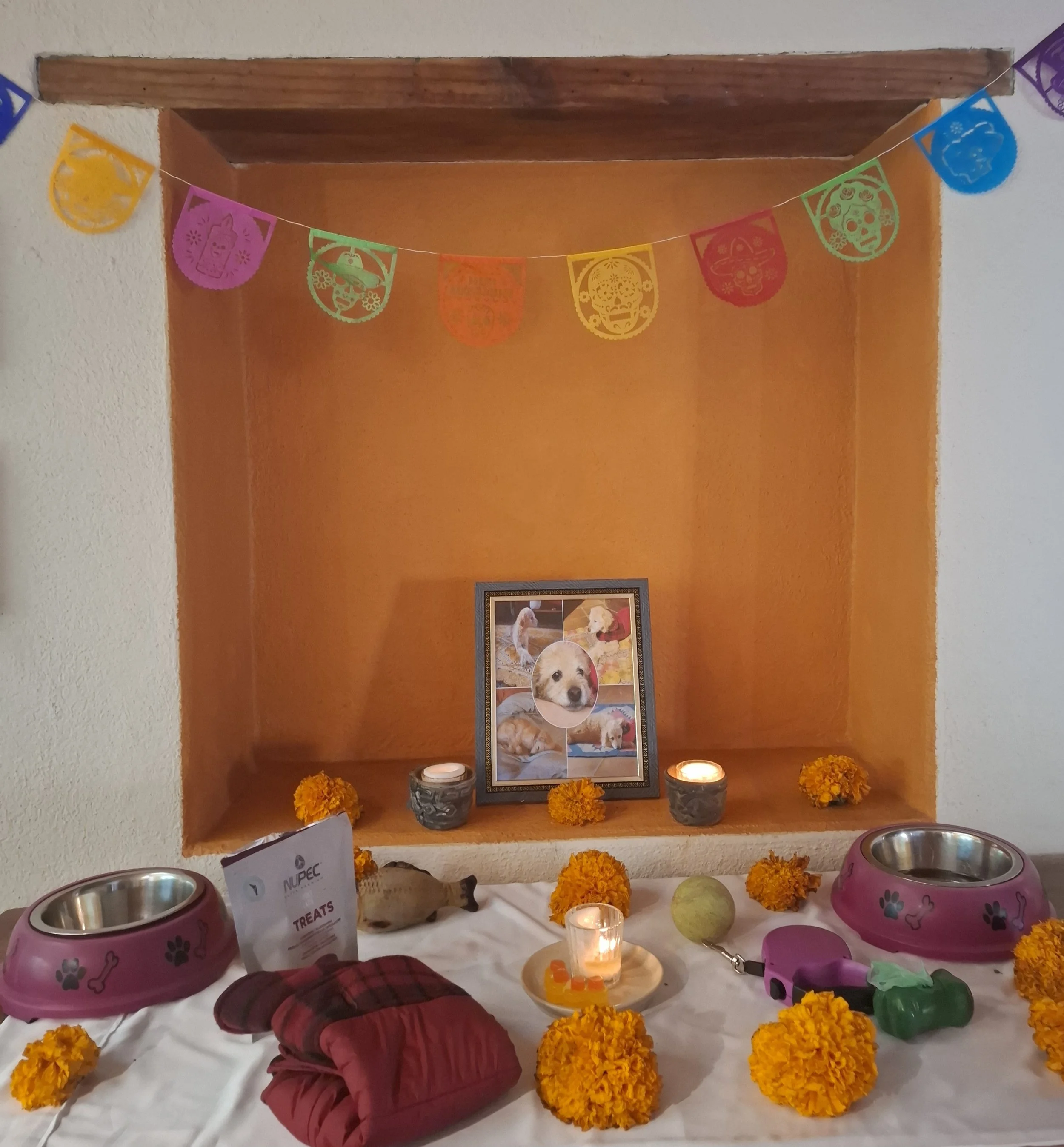
This blog post about the Mexican holiday Día de Muertos is dedicated to Cora, our beloved perrita, a small dog who passed away on June 26, 2026. I recently wrote a blog post about Cora’s passing last June, and at Muertos Chuck and created an altar to honor her life and passing, and invite her soul into our home.
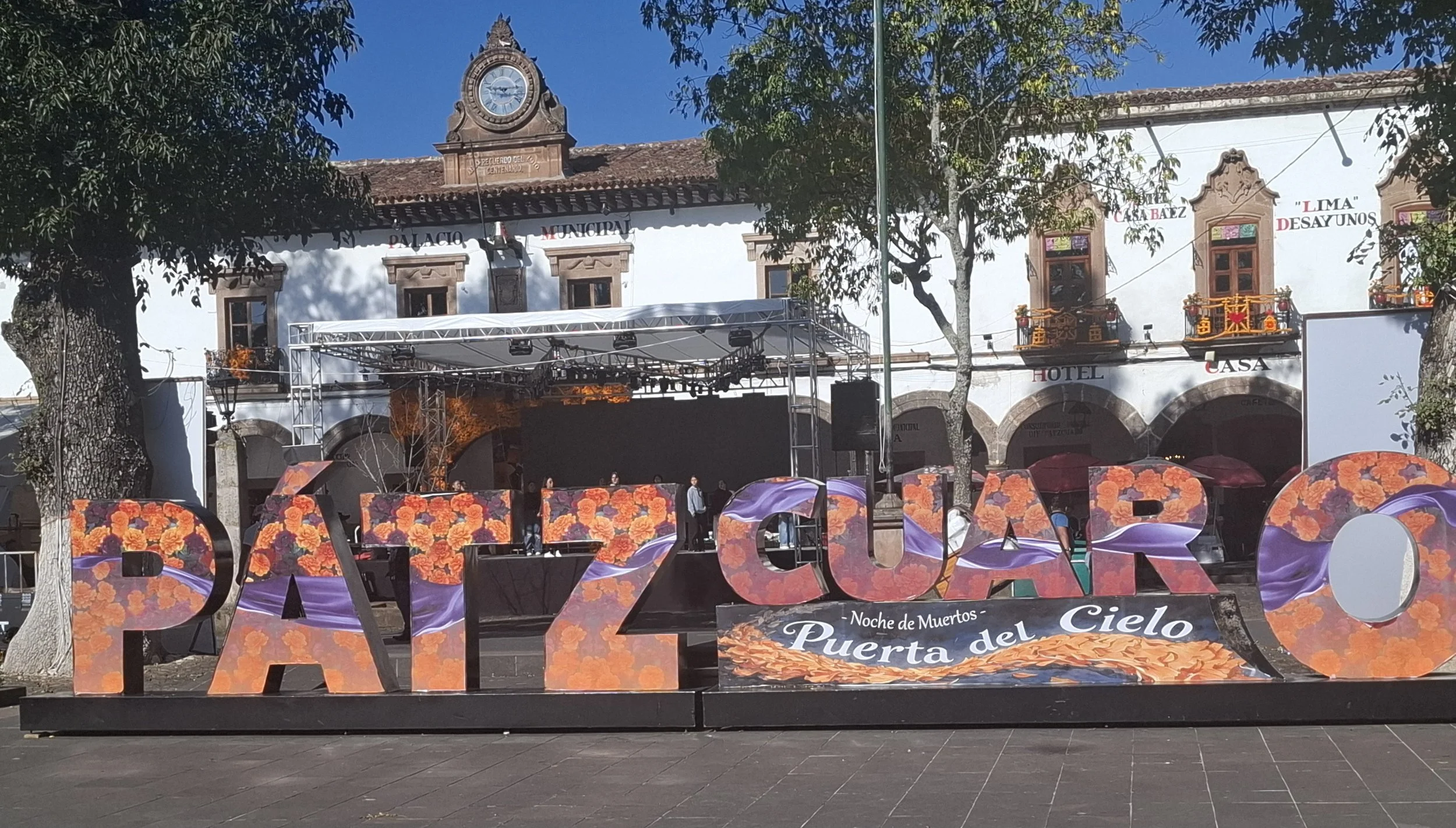
Pátzcuaro, Michoacán, is known worldwide as the center for Día de Muertos celebrations. This is where Chuck and I have lived since 2021.
The annual Mexican celebration, Día de Muertos, Day of the Dead, or La noche de las Almas, Night of the Souls, as the Purépecha people in Michoacán call it, is a time when families gather to honor and reámember loved ones who have died. Many believe the souls of the dead return to visit living families in homes, businesses, and cemeteries. The Aztecs honored their dead with fiestas and rituals during the harvest season. They viewed death as the beginning of the cycle of seasons and life.
On October 27th, the heavens open for our beloved mascotas’ almas, pets’ souls, to join families in their homes; the 28th is the day of the Accidentados, those souls who died in accidents. On October 31st, we honor the souls of children, called los angelitos. On November 1st, we remember the spirits of adults. The spirits are believed to depart the following day, November 2nd. Entire Mexican families construct traditional ofrendas (altars, offerings) that reflect a mixture of Catholicism and ancient Mexican/Aztec cultural practices. The altars vary greatly, dependineg on village and regional traditions. In homes, people put a lot of effort into preparing traditional foods.
Anything can be placed on the altar for the visiting souls, including traditional food, fresh flowers, pan de muerto (or bread for the dead), candles, copal incense (aromatic tree resin), fruits, cloths, photographs, favorite drinks of the deceased, sugar folk toys, religious images, and clothing. Decorations also include tombstones, clay and other materials, skulls and skeletons, sugar skulls, and, similar to prayer flags, papel picado. Most importantly, a photograph of the departed soul is placed on the altar. Pan de muerto, bread for the dead, is sweet and baked in shapes of skulls and human figures. Traditional loaves are round with a central raised knob of dough, representing the skull, with crossed bone-shaped decorations radiating from the central knob. Día de Muertos also includes traditional dishes, such as chicken in red or black mole sprinkled with sesame seeds; tortillas, tamales made from ground corn; soft drinks or aguardiente (“white lightning” liquor), tequila, and always a glass of water. People believe returning souls are thirsty after a long journey. Water is also believed to be essential for life.
The flower of the dead is called Cempasúchil (Náhuatl, or Aztec, name for marigold). Cempasúchil was the symbolic flower of death for the Aztecs because once it is cut, it dies very quickly. While orange and yellow marigolds are the main flowers, magenta terciopelo (ruby coxcombs) and nube (baby’s breath) are also traditionally displayed. Copal (tree resin) is used as incense and symbolizes the transformation from the physical to the supernatural, associated with the soul's return to the ofrenda. Each departed's name is written on a sugar skull. The names of the living are also written on these treats to introduce children to the idea of death in a joyful atmosphere. People eat these sugar skulls, and the living come to associate pleasant sensations with the sadness of death. Candles and fresh marigold flowers are placed on the altar to light and guide the souls' way to the altar. Paths are marked with flower petals showing the departed souls the way to the altar. Day of the Dead toys are also placed on the altar. Painted clay skeleton figures portray the dead resuming their normal activities such as playing. Pull toys, coffins, and crank boxes are displayed for the dead to play with.’
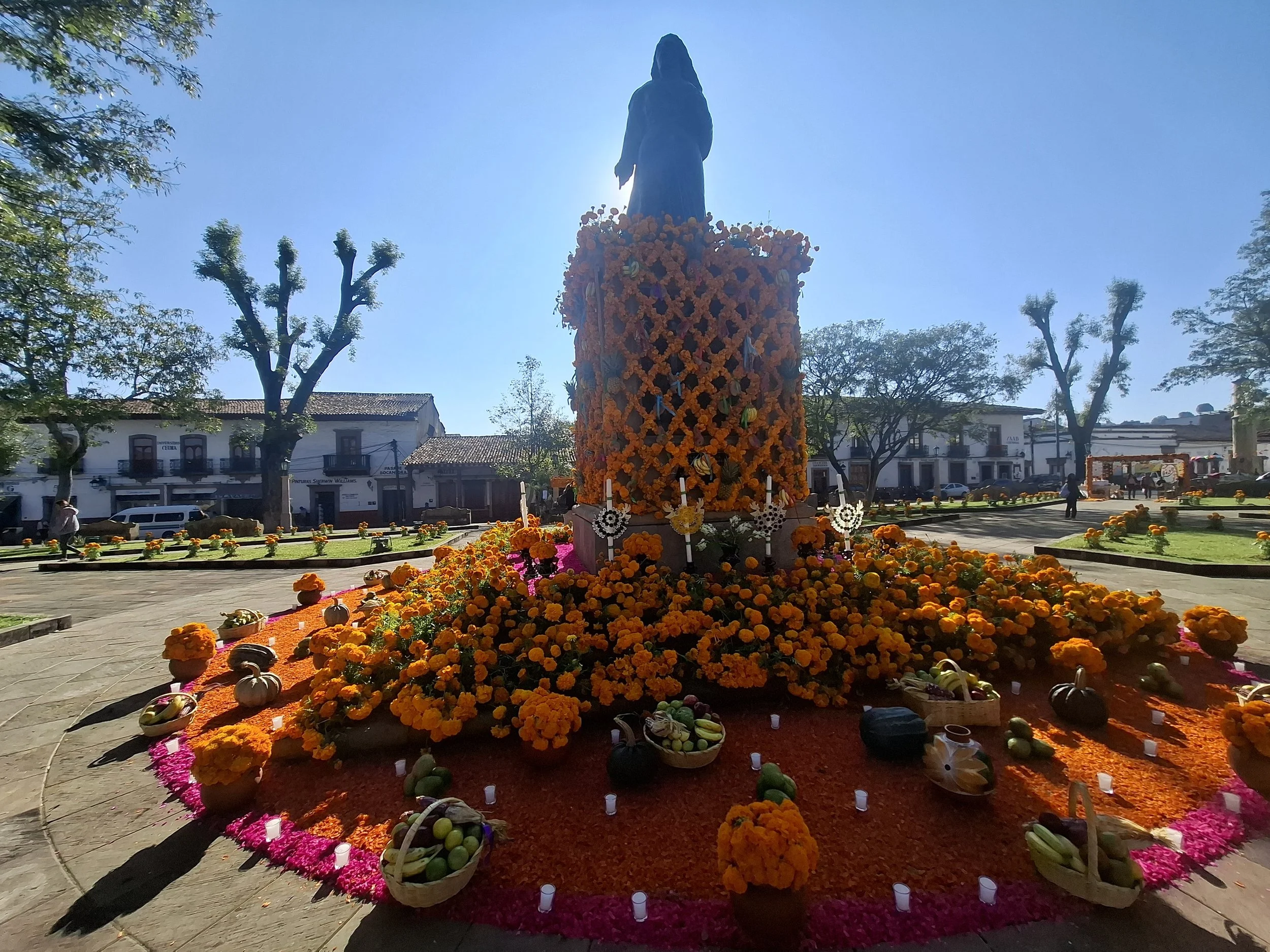
Maria Gertrudis Teodora Bocanegra Mendoza, known as Gertrudis Bocanegra, (April 11, 1765 – October 11, 1817) was a key heroine and insurgent spy during the Mexican War of Independence, widely known as “:La Heroina de Pátzcuaro.” This photo was taken in Plaza Chica, Pátzcuauro, Michoacán, closeby to where we live.
Living with death in this way is central to the way Mexicans integrate life and death, accepting death as a part of life, and a healthy way to live.
I welcome your comments to this blog post or any comments or questions you may have about my work or life in Mexico, sherry@sherryrhynard.com.
